
Go to the page content

Curious about weight management?
Whether it is your weight loss journey or someone you know, dive in and discover more!

Get started by exploring the sections below.

beyond weight

Understanding the weight management journey

Obesity is a complex, chronic disease shaped by lots of things, like lifestyle, genes and even the environment around us. That is why losing weight (and keeping it off) can be tough and why it’s different for everyone.

But remember there is no ‘one-size-fits-all’ approach to managing weight. Each person’s journey is unique. If support is needed, your healthcare provider can help find a plan that works for you.

On this page, you’ll find tips and ideas that can be tailored to different goals and lifestyles, whether you are exploring for yourself or learning to support someone else.

beyond weight

How you can manage weight

If you’re living with excess weight, your healthcare provider may have advised you to lose weight by eating a healthy diet or doing regular exercise.

It is important to remember that these lifestyle changes do not happen overnight and can take some time. Below, you can find out more about how these changes can support you in managing your weight.

Lifestyle changes to manage weight

Having a healthy, balanced diet

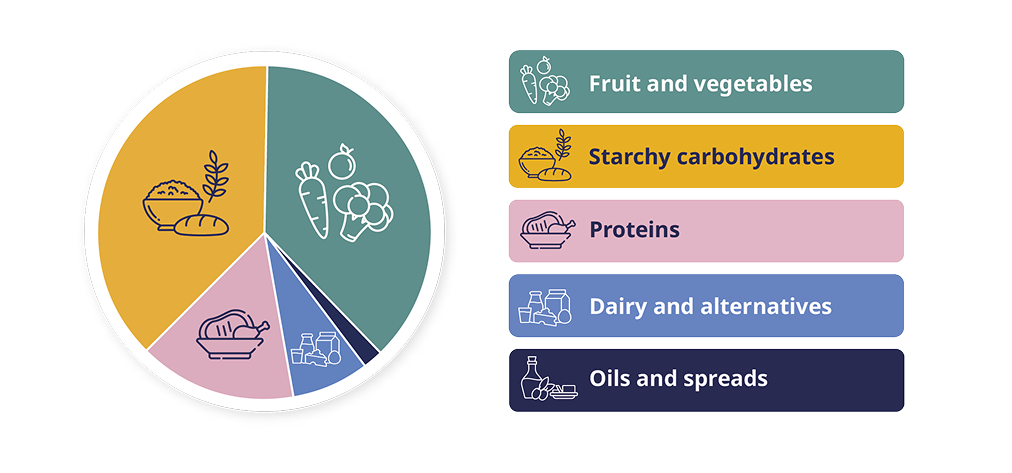
  • There is no such thing as a perfect diet for achieving a healthy weight. It is about finding balance in a way that works for you. Whether you are trying to make changes or just curious about what a healthy, balanced diet looks like, here is an overview of how to get started:
Balanced diet
  • Fruit and veg – aim for five portions a day. A portion is roughly a handful (about 80 g). A mixture of colours and types can help make sure you get a variety of nutrients
  • Potatoes, bread, rice, pasta or other starchy carbs – try switching to wholegrain when you can, such as wholewheat pasta, brown rice or seeded bread. These can keep you fuller for longer and help with energy
  • Beans, pulses, fish, eggs, meat and other meat alternatives – these are good sources of protein, vitamins and minerals. Try to switch from processed meats (like sausages or bacon) for leaner options.

    - Aim for two fish portions a week – one oily, like salmon or mackerel
  • Dairy and alternatives – try lower fat and sugar options, such as:

    - Semi-skimmed, skimmed or 1% fat milk
    - Reduced-fat cheese (if you love full-fat cheese, enjoy it in smaller amounts. It is all about balance)
    - Plain, low-fat yoghurt
  • Oils and spreads – choose small amounts of unsaturated options, like vegetable, rapeseed, olive and sunflower oils
  • Food high in fat, salt and sugar – these aren’t off-limits. It is just recommended to have these occasionally and in smaller portions  
  • Drink plenty of fluids – aim for 6–8 glasses a day. These can include water, tea, coffee, low-fat milk, or sugar-free drinks. Keep fruit juice and smoothies to around 150 ml a day

You can find more information and guidance on how to eat a balanced diet on the NHS website.

It can be hard to plan your meals from day to day, on top of everything else you have going on in your life. But there are tools to help support you, like our meal planner.

Remember, it is important to avoid diets that recommend unsafe practices, such as fasting or cutting out entire food groups. These diets do not work in the long run and can make you feel ill. Talk to your healthcare provider to find out what dietary approach is right for you.

Exercising at your own pace

  • Being active can have benefits for your body and mind, such as:
  • Losing weight or keeping you at a healthy weight
  • Helping you sleep better
  • Lowering the risk of other conditions, such as type 2 diabetes or heart disease
  • Boosting your mood
  • Keeping your bones strong
  • Reducing stress

Each person is unique, so there isn’t one ‘right’ way to exercise. What’s more important is to find something that you can enjoy and want to keep doing.

In the UK, it’s recommended that adults should do at least 150 minutes (that’s 2 and a half hours) of moderate-intensity activity a week. And there are lots of different activities that count towards this. If this still sounds like a lot, you could instead do 75 minutes of vigorous-intensity activity a week, or a combination of both moderate and vigorous activity. You should also do strength exercises two days a week. To find out more about what these exercises look like, download our fitness guide below.

For more information and guidance on increasing how much you exercise, visit the NHS website. You should always talk to your healthcare provider to ensure your exercise plans are appropriate for you.

If you are living with excess weight or obesity, you may need to exercise for longer each day:

  • To prevent obesity, 45–60 minutes of moderate-intensity activity a day is recommended
  • To avoid weight regain, you may need to do 60–90 minutes of activity a day

It’s also important to minimise ‘sedentary time’ by:

  • Reducing the time you spend sitting or lying down
  • Breaking up long periods of inactivity by doing activities like getting up and taking a walk

Treatments

Your healthcare provider may also speak to you about treatments for weight loss.
These won’t be suitable for every person but your healthcare provider can advise.

Behavioural therapies

Talking to a trained therapist may help you change the way you think about food and eating. This is sometimes known as cognitive behavioural therapy (CBT). CBT aims to help you make positive changes. During a CBT session, the therapist can talk to you about what challenges you are facing and how they make you think, feel and act.

Talk to your healthcare provider to find out how you can access CBT.

Medicines

There are medicines that may support weight loss and management in adults alongside healthy lifestyle changes. You should only use weight management medicines if your healthcare provider or pharmacist has prescribed them to you. They will check if a medicine is safe and right for you. 

Not everyone living with obesity or excess weight needs to take medicines. Your healthcare provider will advise you on a management plan that is right for you.

Surgery

In certain cases, surgery may be needed for people affected by obesity, depending on their health needs and BMI.

Your healthcare provider will advise you on this if it is an appropriate option for you.

Other ways to support your weight loss journey

beyond weight

Setting realistic goals

Setting goals that you can achieve can help you stay on track and manage expectations. When deciding what goals to set, you may find it helpful to use the SMART goals approach. SMART goals are:


  • Specific – what do you want to achieve?
  • Measurable – how will you measure what you want to achieve?
  • Achievable – how will you reach your goal?
  • Relevant – how important is it that you reach your goal?
  • Time-bound – when do you want to start working towards your goal and for how long?

For example, a SMART goal could be: “I want to walk 5,000 steps every day by taking a walk in my local park and walking to the shops. I want to reach this goal by the end of this month because I want to increase my fitness level and move more.

You may want to monitor your progress over time to help you stay motivated and on track by writing it down in a diary or calendar. 

beyond weight

Practising mindful eating

Mindful eating is a way of being fully present when you are eating. By doing so you can become more aware of your thoughts and feelings during and after you eat. This can help you choose food that is both satisfying and nourishing, as well as becoming more aware of when you feel hungry or full. There are ways that you can practise mindful eating by:


  • Slowing down when eating to help your body recognise when it is full. Taking time to pause between each mouthful may help you feel more relaxed and enjoy your meal
  • Listening to your body when you feel hungry or start to feel full. Thinking about how your body reacts when hungry or full can help you recognise this feeling
  • Reflecting on your thoughts and feelings can help you recognise if you are eating for reasons other than feeling hungry. Sometimes emotions can trigger hunger, such as a sudden craving. So, it is important to identify what drives your eating
beyond weight

Building your support network

Having people around you who you can trust, like your family or friends, can help you stay motivated and keep track of your weight management. They can also support you in making lifestyle changes. Finding a support group and connecting with others can be a great place to share similar experiences and practical advice when facing challenges along your journey. Your healthcare provider can also support you with managing weight, whether it be setting goals or making lifestyle changes.

Remember, asking for help is a sign of strength, not weakness. Your support network can play an important role in helping you build positive habits for long-term health.

Understanding weight and wellbeing – take the quiz!

Are you ready to test your knowledge about how to navigate life with excess weight? Take this quiz now and feel prepared.

Question 1 of 4

Understanding weight management 

Question 1

What is the definition of weight stigma?

Weight stigma is when there are negative attitudes or beliefs about a person’s weight and size, which can happen in day-to-day life. This could be at work, in public spaces or in healthcare settings.

Weight stigma is when there are negative attitudes or beliefs about a person’s weight and size, which can happen in day-to-day life.

Weight stigma is when there are negative attitudes or beliefs about a person’s weight and size, which can happen in day-to-day life.

0% answered this correctly

Question 2

What can help improve mobility and reduce joint pain?

Other changes to your diet can help – why not try adding more calcium and vitamin D to support bone health. 

Assistive devices like these can help reduce stress on the joints.

Other changes to your diet can help – why not try adding more calcium and vitamin D to support bone health. 

0% answered this correctly

Question 3

Obesity is linked to other chronic conditions, such as lower back pain and osteoarthritis – true or false?

Obesity can cause more stress on the joints and body. This can lead to people facing chronic pain and other conditions like lower back pain and osteoarthritis.

Obesity can cause more stress on the joints and body. This can lead to people facing chronic pain and other conditions like lower back pain and osteoarthritis.

0% answered this correctly

Question 4

What ways can help a person affected by excess weight manage their mental health?

Finding time during the day to relax and making time for yourself can help you rest and recover.

Finding time during the day to relax and making time for yourself can help you rest and recover.

Finding time during the day to relax and making time for yourself can help you rest and recover.

Finding time during the day to relax and making time for yourself can help you rest and recover.

They may be able to offer you support from a specialist such as counselling.

0% answered this correctly

You're well on your way

Looks like there is still room for improvement. Learn more about obesity below.

Good job

Well done you! You are well on your way to becoming ‘in the know’ on obesity. Keep learning to get that 100% next time.

Perfect!

You know your stuff! If your friends are as sharp as you, you can send them a challenge.

What is the definition of weight stigma?

Weight stigma can affect many different aspects of a person, not just at work. It can happen in public spaces and healthcare settings as well.

What can help improve mobility and reduce joint pain?

Low-impact exercises such as swimming, cycling or yoga are recommended to help keep the joints moving without adding stress.

Obesity is linked to other chronic conditions, such as lower back pain and osteoarthritis – true or false?

What ways can help a person affected by excess weight manage their mental health?

Det er helt korrekt. Undersøgelser viser, at omkring 40 % af børn med overvægt i 4-7-års alderen vil opleve overvægt som voksne.

Finding time to do a hobby, like reading or gardening, can help lower stress levels.

Looking for practical tools?

  • Check out our diet and exercise guides, as well as our advice on talking to your healthcare provider about weight.


Find support

  • Access practical tools, with a guide on talking to your healthcare provider and more.


References
  1. National Health Service (NHS). Obesity: Treatment. Updated 2025. (Website - accessed December 2025).
  2. National Institute for Health and Care Excellence (NICE). Physical activity and diet. Overweight and obesity management: Guidance NG246. Updated 2025. (Website - accessed December 2025).
  3. National Health Service (NHS). The Eatwell Guide. Updated 2022. (Website - accessed December 2025).
  4. National Health Service (NHS). Eating a balanced diet. Updated 2022. (Website - accessed December 2025).
  5. National Health Service (NHS). Benefits of exercise. Updated 2024. (Website - accessed December 2025).
  6. National Health Service (NHS). Physical activity guidelines for adults aged 19 to 64. Updated 2024. (Website - accessed December 2025).
  7. National Health Service (NHS). How it works - Cognitive behavioural therapy (CBT). Updated 2022. (Website – accessed December 2025).
  8. Lloyds Pharmacy Online Doctor. Setting weight loss goals. Updated 2025. (Website - accessed December 2025).
  9. British Dietetic Association (BDA). Mindful Eating. Updated 2025. (Website - accessed December 2025).
  10. UK Parliament. Weight Stigma and Discrimination. Health and Social Care Committee: Written Evidence. Updated 2025. (Website - accessed December 2025).
  11. North Tees and Hartlepool NHS Foundation Trust. Knee Support and Brace Information. Updated 2023. (Website - accessed December 2025).
  12. Nouri FM, Nakhaee N, Bokaee S, et al, 2022. A systematic review of research on sitting and working furniture ergonomic from 2012 to 2022: analysis of assessment approaches. Work. 73(2): 575–590.
  13. National Health Service (NHS). Osteoarthritis. Updated 2023. (Website - accessed December 2025).
  14. National Health Service (NHS). Tips to reduce stress. Updated 2023. (Website - accessed December 2025).

All images are for illustrative purposes only.

UK25OB00145 | December 2025