

Go to the page content


Excess weight is more than just a number on the scale. Obesity is a complex condition that can be affected by genetics, biology and even our environment. Real change starts with understanding the whole story.


Get started by exploring the sections below.

beyond weight

Weight is not just about size or shape

Obesity is a long-term health condition that can affect many parts of the body. A person living with overweight or obesity may not always feel unwell, but carrying extra weight over time can lead to other problems. They may feel judged, blamed or misunderstood, which can make it harder to ask for help.

But remember – obesity is not about willpower or personal failure. It is a complex health condition that involves a person’s body, brain and environment.


beyond weight

Talking about weight

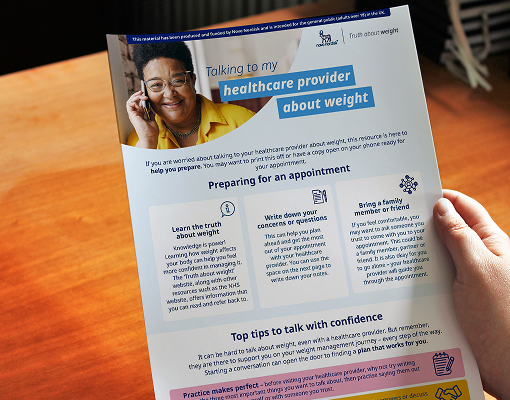
It can be hard to talk about weight to a healthcare provider. What should you ask? Where do you begin?


You can get started with our ‘Talking to my healthcare provider about weight’ guide. This can help you feel prepared to have an open and honest conversation.


How weight affects the body

Excess weight can affect a person’s health in many ways. It can raise the risk of several other health conditions, including:

 
  • Type 2 diabetes – a condition where the body struggles to control blood sugar levels
  • Coronary heart disease – when the blood supply to the heart is blocked by a build-up in the arteries
  • High blood pressure – also known as ‘hypertension’, high blood pressure can lead to a stroke or heart attack
  • Heartburn – a burning feeling in the chest and throat
  • Metabolic syndrome – this term describes health problems that put a person at risk of developing type 2 diabetes or heart conditions
  • Cancer – including several different types such as breast, bowel and womb cancer
  • Asthma – a common condition that affects how well a person can breathe
  • Gallstones – small ‘stones’ made of cholesterol that form in the gallbladder
  • Osteoarthritis – pain and stiffness in the joints
  • Sleep apnoea – a condition that disrupts breathing during sleep, which can lead to daytime sleepiness
  • Liver disease – high levels of fat in the liver, which increases the risk of other health conditions like type 2 diabetes and kidney disease
  • Kidney disease – a condition that means the kidneys do not work as well as they should
  • Fertility problems – including difficulty getting pregnant and higher risk of miscarriage
  • Problems with pregnancy – this can include a higher risk of high blood pressure or diabetes during pregnancy

Someone living with excess weight may not have any of these problems.
But knowing the risks can help you, or someone you know, take the first steps on a weight loss journey.

Why small changes matter

If you are living with excess weight, even a small amount of weight loss can help to improve your health.
Losing 5% to 10% of your body weight can:
 

  • Lower your blood pressure
  • Reduce your risk of type 2 diabetes
  • Ease pressure on your joints
  • Improve your mood

You do not have to do everything at once.
Start with one small, realistic change and build from there.


Overcoming barriers

Losing weight is not always easy. Many things can get in the way, such as:

  • Not knowing where to start
  • Having health problems that affect energy or movement
  • Struggling with time, money or access to healthy food
  • Feeling low, stressed or judged
  • Mental health problems, such as depression or anxiety
  • Difficulty keeping motivation high each day

These problems are real and valid. They can make it harder to take the first step or stay on track.
But they do not need to get in the way of progress. Support is available and can make a real difference.


What support looks like

If you are living with excess weight, you do not have to go on this journey alone. You can feel better and move forward in several ways, such as:

Speaking to a healthcare provider

Working with a specialist, such as a dietitian

Using weight management services in your area

Joining a support group or online community

Talking about your feelings with someone you trust

There is no single 'right' way to lose weight.
What matters is finding what works for you.

Every person deserves support, respect and care

Many people who are living with overweight or obesity can feel blamed or ignored.
Remember that obesity is a complex health condition, not a personal failure.
 

Understanding weight

  • Explore lifestyle changes that can help with weight management, from healthy eating to getting more active.


Need support now?

  • Visit our finding support page to learn more about what support is available to you.


References
  1. National Health Service (NHS). Obesity. Updated 2023. (Website - accessed December 2025).
  2. World Health Organization (WHO). Obesity and Overweight. Updated 2025. (Website - accessed December 2025).
  3. National Health Service (NHS), What is type 2 diabetes. Updated 2025. (Website - accessed December 2025).
  4. National Health Service (NHS). Coronary heart disease. Updated 2024. (Website - accessed December 2025).
  5. National Health Service (NHS). High blood pressure. Updated 2024. (Website - accessed December 2025).
  6. National Health Service (NHS). Heartburn and acid reflux. Updated 2024. (Website - accessed December 2025).
  7. National Health Service (NHS). Metabolic syndrome. Updated 2024. (Website - accessed December 2025).
  8. National Health Service (NHS). Asthma. Updated 2024. (Website - accessed December 2025).
  9. National Health Service (NHS). Gallstones. Updated 2024. (Website - accessed December 2025).
  10. National Health Service (NHS). Body weight and fertility. Updated 2024. (Website - accessed December 2025).
  11. National Health Service (NHS). Non‑alcoholic fatty liver disease. Updated 2024. (Website - accessed December 2025).
  12. National Health Service (NHS). Kidney disease. Updated 2024. (Website - accessed December 2025).
  13. Ryan DH, Yockey SR, 2017. Weight loss and improvement in comorbidity: differences at 5%, 10%, 15%, and over. Current Obesity Reports. 6(2):187–194.
  14. Kim TN, 2020. Barriers to Obesity Management: Patient and Physician Factors. Journal of Obesity & Metabolic Syndrome. 29(4):244–247.
  15. Binsaeed B, Aljohani FG, Alsobiai FF, et al, 2023. Barriers and Motivators to Weight Loss in People With Obesity. Cureus. 15(11):e49040.

All images are for illustrative purposes only.

UK25OB00140 | December 2025